

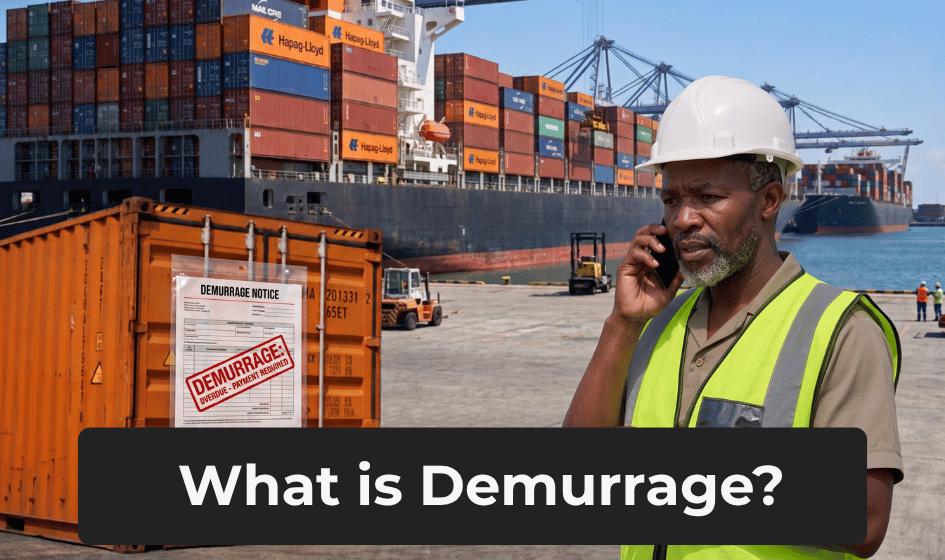
Demurrage is a charge that can quickly increase the cost of importing goods into Nigeria. It applies when an importer does not move a loaded container out of the port or terminal within the free period provided by the shipping line.
For businesses importing through Apapa, Tin Can Island, Port Harcourt, Calabar, or other Nigerian ports, understanding demurrage is important. Good planning, correct documents, and early clearance action can help you avoid unnecessary charges and keep your goods moving.
What Does Demurrage Mean?
Demurrage is a daily fee charged by a shipping line when its loaded container stays in the port terminal beyond the allowed free days.
When a vessel arrives and containers are discharged at the terminal, the shipping line gives the importer a limited period to clear the goods and take the container out of the port. If the container remains inside the terminal after that free time ends, demurrage begins to accumulate.
The exact number of free days and the daily charge depend on the shipping line, container type, cargo type, and agreed terms. Importers should always confirm the free-time terms on their shipping documents and directly with the shipping line or freight-forwarding partner.dhl+1
Demurrage, Storage and Detention
These terms are often used together, but they are not exactly the same. Knowing the difference helps importers understand the charges they may face.
| Charge | Who charges it? | When it applies |
| Demurrage | Shipping line | When a loaded container stays inside the port terminal beyond the shipping line’s free time |
| Storage charge | Terminal operator | When cargo or a container remains in the terminal beyond the terminal’s free storage period |
| Detention | Shipping line | When an importer takes a container out of the port but does not return the empty container within the allowed time |
A shipment can attract both demurrage and storage charges at the same time because the shipping line and terminal operator charge for different reasons. Demurrage relates to use of the shipping line’s container, while storage relates to space occupied at the terminal.dhl+1
Why Does Demurrage Happen?
Demurrage usually happens because cargo is not cleared and removed from the terminal before the free days expire. This can result from one issue or a combination of issues.
Common causes include:
- Incomplete, late, or incorrect shipping documents
- Delays in processing Form M, PAAR, invoices, packing lists, Bills of Lading, or regulatory documents
- Incorrect description or classification of goods
- Delayed payment of customs duty, shipping-line charges, or terminal charges
- Customs examination or queries that require additional information
- Regulatory checks for products controlled by agencies such as SON or NAFDAC
- Delays in obtaining delivery instructions or shipping-line release
- Poor coordination between the importer, supplier, clearing agent, shipping line, and transporter
- Failure to arrange a truck or delivery plan early enough
- Late return of the empty container after delivery, which can lead to detention charges
Even a short delay can be expensive because daily charges may rise after each charging period. For example, one carrier’s Nigeria tariff lists higher demurrage rates as days outside the free period increase, with different rates for 20-foot, 40-foot, dry, and refrigerated containers.
How to Avoid Demurrage
Demurrage is not always avoidable. Port congestion, customs examinations, system interruptions, inspections, and other issues outside an importer’s control can delay release. However, many demurrage costs can be reduced through proper preparation and active follow-up.
Prepare Documents Before Cargo Arrives
Do not wait until the vessel has arrived before checking your import documents. Confirm that the Bill of Lading, commercial invoice, packing list, Form M, PAAR, product certificates, permits, and other required documents are complete and consistent.
Your documents should accurately describe the goods, their quantity, value, country of origin, and shipping details. Errors may lead to queries, reassessment, or a longer clearance process.
Confirm Your Free Days Early
Every shipping line has its own free-time policy. The number of free days may differ based on the shipping line, type of container, cargo category, and shipping agreement.
Confirm the following as soon as your cargo is shipped:
- The number of demurrage-free days
- The terminal’s storage-free days
- The date from which the free days will be counted
- The daily charge after free time expires
- The deadline for returning the empty container after delivery
For example, PIL Nigeria currently states standard free periods of seven days for dry import containers and five days for refrigerated containers, but this should not be treated as a general rule for every shipping line or shipment.
Start Clearance Before Arrival
Begin the clearance process as early as possible. Share the shipping documents with your clearing agent before the vessel arrives, not after.
Early preparation gives the agent time to review documents, identify missing requirements, advise on duties and charges, and plan for the clearance process. It also gives the importer time to arrange funds for duty payments and other approved charges.
Pay Approved Charges Promptly
Cargo release can be delayed when customs duty, terminal charges, shipping-line charges, or other required payments are outstanding.
Importers should plan their cash flow before cargo arrives. Set aside funds for applicable duty, taxes, terminal charges, transport, and other logistics expenses. Prompt payment helps prevent delays that can lead to demurrage and storage charges.
Work With an Experienced Clearing Agent
A professional clearing agent helps coordinate the steps involved in getting cargo released. This includes checking documents, following up on customs processes, communicating with relevant port stakeholders, and arranging cargo evacuation when release is granted.
A clearing agent cannot guarantee that every shipment will be released within a set number of days. However, experienced support can help identify problems early, reduce avoidable mistakes, and ensure that the importer receives timely updates.
How Nonny Global Services can help?
Nonny Global Services Ltd. understands that demurrage and storage charges can affect the profitability of a shipment. Our role is to help clients reduce avoidable delays through early document review, coordinated customs-clearing support, regular follow-up, and practical haulage planning.
Our services include:
- Customs clearing and freight-forwarding support
- Sea and air cargo handling
- Haulage coordination and inland delivery support
- Warehousing solutions
- Logistics consultancy for importers and exporters
- Support across major Nigerian seaports and international airports
If you are planning an import shipment, involve Nonny Global Services Ltd. on time. The earlier your documentation, payment plan, clearance process, and delivery arrangements are prepared, the better your chances of avoiding unnecessary demurrage and storage charges.